Archive for the Integrated Technology Services Category

The Paperless Court

Apropos my last post about the Paperless Office, I was reading the March/April 2010 issue of Baseline Magazine, which ran a terrific article, “Disaster-Proofing IT After Katrina,” about how the Gulfport Municipal Court in Louisiana was devastated by Katrina and, as a result, the Court secured a grant from the Department of Justice and digitized the entire office (after the hurricane, they actually tried using Rubbermaid containers for filing). Now — after training — the Court runs efficiently - electronically, with everything scanned, calendars/dockets electronic, etc. No more paper files. As the article concluded:

By streamlining its infrastructure, investing in a digital imaging solution and storing data in multiple sites, Gulfport Municipal Court has created order from chaos. It is now prepared for the worst that hurricane season can dish out, while fervently hoping that nightmare never returns.

As we discussed in the PBI “Paperless Office” course, going paperless (or “less paper” as I call it), improves efficiency and avoids many nightmares. In fact, last week after the seminar I walked past the site of the former Meridian Building, that burned down before the digital age and commented how, if the tenants had access to today’s technology, they might have been up and running in new quarters in just a matter of days. I know it’s a leap, but the sooner you make the jump to “less paper,” the better off you and your staff will be.

Paperless Office

I’m just finished lecturing about “How to Go Paperless” for PBI in Philadelphia with attorneys Rachel Branson, Walter Robinson and Twanda Turner-Hawkins. I demonstrated the various software we support and use. Most positive was the very good attendance, with about 35 people at the program. More and more, lawyers are beginning to recognize the need to reduce their reliance on paper, and the need to focus more on how technology makes them more efficient. We’ll be reprising the seminar next week in Pittsburgh on April 29th. Key discussion points today were backups, restoring backups, security and encryption and social media privacy information.

Legal Tech Thoughts

Today, my associate, Molly Barker Gilligan, Esquire, and I made our annual pilgrimage to Legal Tech, the mammoth legal technology trade show in New York. What a difference year makes.

Crowds - last year they were relatively sparse, today the aisles were filled with people.

Liveliness - last year the attendees seemed quiet and reluctant to engage the vendors, today, was the opposite.

It’s clearly a sign that, at least for some in the legal industry, the times are changing. What also remains a shock is how many e-discovery vendors there are, and how they can all possibly stay in business, and thrive.

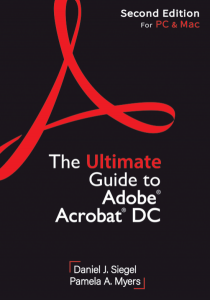
For us, at Integrated Technology Services, LLC, it was an opportunity to meet with our many partners (including Legal Files, Payne (Metadata  Assistant), Time Matters, Sanction, Concordance, and Summation, to name a few), and to discuss the progress of my upcoming book, The Lawyer’s Guide to CaseMap, which is expected to be published this summer by the American Bar Association. Of course, it was great seeing the many support and sales people from LexisNexis CaseSoft.

But mostly, the show is about taking the temperature of legal technology, which clearly is hot and alive. Attendees we spoke with were upbeat about the future and seemed to think the worst is past. We’ll have to see. But certainly, Legal Tech 2010 was a success for Molly and me, and we look forward to the 2011 edition.

Legal Technology Blog Returns

After a roughly nine month hiatus, the  Legal Technology Blog has returned, alive and well. A mix of health issues, a heavy workload, and my campaign for re-election as a Commissioner in Haverford Township (I won re-election by 40 votes), left little time for this blog or my Pennsylvania law blog. But with 2010 here, it’s time for the blogs to return. This blog will continue to comment upon new trends in legal technology, tips to be a more efficient attorney (or support person) and other related topics.

Stay tuned, and thanks for your patience.

Dan Siegel

Ahh, the No Asshole Rule

A few years ago, I reviewed a book, The No Asshole Rule, for The Philadelphia Lawyer, the Philadelphia Bar Association magazine. Written by Robert Sutton, a Professor of Management Science and Engineering at Stanford University, the premise of the book is that no business should hire, tolerate or perpetuate the employment of “certified assholes,” people who are assholes all the time.

In my review, I wrote (regretfully “tongue in cheek”) that “We are simply blessed that there are no assholes in our legal community and certainly none who fit the moniker of a “certified asshole.” Consequently, Sutton’s premise that businesses are more productive, more profitable and have a better “atmosphere” when they do not hire, do not retain, and do not promote “certified assholes” – becomes irrelevant. ”

Today, however, brought home just how far my tongue was in my cheek. I circulated my e-newsletter, and sure enough two people opted out (decided they didn’t want to receive the newsletter anymore). And guess what, when I thought of them, I thought of my book review. One is a solo lawyer who didn’t like the idea of paying for my services, so she fabricated stories. For example, she claimed I charged for every phone call when in fact not only didn’t I charge her for phone calls (not once), but I didn’t charge for many other times I assisted her - including once when she cornered me and obtained free training for half an hour at a trade show. The other lawyer hired me for training, I did two sessions and her response was totally positive. She said the sessions were great, never a complaint. Unfortunately, they never paid my bill, and are indignant over the fact that I turned them over to a collection agency. Gee, that I want to get paid is a shock. After all, they claim that they  have “The resources to take on even the largest companies.” It’s easy if you don’t pay your bills.

So, good riddens to each of those subscribers. I should have removed them myself.

If you would like to subscribe to my newsletters, just go to www.techlawyergy.com and fill out the form.

In closing, I must again plug The No Asshole Rule. It is a thoroughly enjoyable quick read that should be on every manager and worker’s mandatory reading list. Although it is unlikely we can ever completely eliminate these venomous vipers from our midst, The No Asshole Rule at least offers hope that more workplaces will adopt the rule and that certified assholes will become extinct. We can only hope.

Never Read a Paper Deposition or Other Transcript Again

For years I have argued that lawyers who read paper transcripts are “wasting” time. I don’t mean they aren’t working. I mean they could be working better faster, with improved results, merely by using transcript/deposition review software. In my case, I haven’t read a paper transcript since 2001 and my staff is forbidden from doing so.

The problem, however, is that many lawyers were leery of putting down the paper. Then, when one of the legal software giants purchased the industry leader, the best software became very expensive, and was sold on a subscription basis that tied you to the company (literally) forever. Plus, much of the competition was not very good. As of today (March 2, 2009), with the release of Lexis Nexis Text Map 5, lawyers can throw away their highlighters, ditch those sticky notes, and get rid of those legal pads filled with notes they can’t understand right after they write them. Text Map 5 is a relatively inexpensive program that will dramatically improve the efficiency of every litigator. I use it on every case in my office and can’t picture being without it. Plus, thanks to a number of program innovations I personally suggested, Text Map 5 is ideally suited to meet the needs of Pennsylvania attorneys, including workers’ compensation practitioners and other litigators. Text Map 5 boasts a host of innovative features that make it comparable (actually better!) than its well-known and far more expensive competition.Text Map was released today, and is simply one of those products every litigator should use. Click here to read a White Paper explaining how I use Text Map, Case Map and other products in my practice. You can also try it for 30 days for free.Are you interested? If so, give me (Dan  Siegel) a call at 610-446-3467 or send me an email at dan@techlawyergy.com. My office sells and supports Text Map, and I am the author of the upcoming book, The Lawyer’s Guide to Case Map, to be published by the American Bar Association. After all, who better to help you learn the product than the person who is writing the book? 

People - Follow Your Gut

My father was a gentle man who understood people. He had an ability to immediately sense who was good, who was trouble, and who to “be careful” with. And he always encouraged me to follow my instincts. He was right, and I only wish I had followed his advice a little more closely recently. I’ve instead learned two lessons, both people- and business-related.

First, if you’ve had prior dealings with someone and they weren’t positive, don’t have more. An attorney came to me for some technological services. I had been involved in a case with him a few years ago; his client was reprehensible, but so were some of his actions. He convinced me at our meeting that what happened then was an isolated incident. My gut said no, but I still took the job. Guess what? My gut was correct, and he acted no differently with me now compared with his conduct years ago. I have terminated our relationship — quickly.

Second, follow your instincts, not the clients. Another client came to me for technology consulting. This person was adamant about the person’s tech skills, and I made training recommendations based upon that representation, rather than my experience. When the person didn’t learn everything as quickly as my underestimate, I became a villain. Bottom line — if you know something should take X hours, and a client insists that he or she can do it in less, continue to estimate based upon what has been historically correct, not what the clent says. If you complete the project or training early, great. You’ll be thrilled and so will the client. On the other, if you don’t meet the expectations you set based on the client’s representation, you lose, and you lose a client. And if the client is particularly vocal, you lose even more.

Software — Big Companies, Good or Bad?

People who know me know that I love computers and software, and that my technology business, Integrated Technology Services, LLC, is just fun for me. It’s like getting paid to play. But it’s still a business, and after a year and half, it’s still a learning process. What have I learned? Some companies treat you nicer than others. Some of the big companies just want to squeeze out the little guy (like I could possibly kill their businesses) while others embrace the little guy. One example is Lexis-Nexis, a monolith no doubt, but a company that has embraced my business and knows that as I succeed, so does it.

I’m now a Certified Independent Consultant (CIC) for Time Matters and am in the process of becoming a CIC for Hot Docs. The people have generally been really nice, and they are committed to working with me. The same goes (10X over) for the wonderful people at Case Soft (they make Case Map, Time Map, etc., and I support them all). They have always been a pleasure to deal with, even after Lexis-Nexis bought them.

On the other hand, other companies get bought out and the first thing they do is try to eliminate me. One company immediately ended my reseller agreement (I made about $50 commission per license) and raised their prices so high that most of my clients — solos, small and mid-size firms — probably aren’t going to buy their product anymore. Do they care? No. They say the number-crunchers told them what to do.

|